


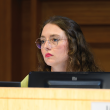




In the days around West Hollywood’s decision to refer Councilmember Chelsea Byers to the state’s political-ethics regulator, 42 posts disappeared from her employer’s Bluesky account.
We had archived every one of them first. And now here they are recovered in full for you to examine.
The Welcoming Neighbors Network is the pro-upzoning anti-parking 501(c)(4) that pays Byers as its campaigns director. On June 28, 2026 we captured a full copy of its Bluesky account, @welcomingneighbors.us — the day before the City Council voted to send Byers’s conflict of interest to the FPPC. By our re-check on July 2, 42 of those posts were gone, confirmed removed at the protocol level.
So we read all 42 back against the archive. They are not a random slice of the account: they cluster around four themes, and every theme lands on the same point — the material most useful to anyone examining Byers’s conflict is the material that disappeared.
A comprehensive analysis and the full record is included below:
What was removed disproportionately (a) names specific bills and states where state government stripped local zoning control, (b) exposes the messaging playbook built to obscure what upzoning does, and (c) documents WNN as a positions-taking, bill-advocating, organizing operation. What survived skews older, softer, and generic.
State preemption of local zoning control largest cluster
Posts celebrating states taking zoning and parking authority away from cities — the exact lever a housing lobby would want a friendly local official to stop resisting:
- SB 79 (CA) — both “[BILL ALERT] SB 79 … has passed the Senate floor!” (408♥) and “SB 79 PASSES OUT OF THE CALIFORNIA SENATE! 🥑” (430♥). The two highest-engagement deletions in the set.
- SB 423 (CA) — “forces cities to follow their own zoning rules.”
- Oregon — “has probably done more than any other U.S. state to systematically shift zoning powers from the local to the state level.”
- Montana, Minnesota, North Carolina, Austin, Denver — ADU legalization, manufactured-housing preemption, statewide parking-minimum bans (NC 107–0), citywide parking-mandate repeal.
Why it matters: this is the direct nexus to the votes Byers casts as a West Hollywood councilmember. Her employer’s deleted posts cheer the removal of local control over exactly the decisions she participates in.
The messaging playbook — how to sell it without naming what it does
- Sightline parking-rhetoric guide: “Do not discuss: density, driving, cars / Do discuss: more homes, more community, less waste.”
- Parking-messaging “toplines”: Problem-Solution-Action; make trade-offs clear; use local stories.
- Praise that a reform “flew under the radar … prevent[ed] handwringing and histrionics.”
Why it matters: deliberate framing to obscure impacts is the opposite of a neutral, no-position civic group.
“Luxury housing doesn’t hurt you” — the West Hollywood displacement flashpoint
- “A luxury apartment went up next door to me. And in my old, naturally below market rate apartment, I didn’t get a rent increase for the first time in years … We need this at scale.”
- Fed rate hikes → fewer multifamily permits → rent inflation (the supply argument).
Why it matters: verbatim the argument WeHo fights over; “luxury apartment next door” and “naturally below market rate” are local hot-button terms.
The organizing & advocacy machine — contradicts “we take no positions”
- Organizer Training Cohort (3-part series) and the YIMBYtown 2025 conference (keynotes, plenaries, the Donald Shoup Awards, breakout groups).
- Job alerts, member networking, cross-organization coordination.
- The explicit local-lobbying model: “organize supporters to submit comments and testify at Public Hearings … today, we celebrate a massive win!”
Why it matters: this is an operation that urges specific outcomes before specific legislative bodies — the thing WNN told SCAG it does not do.
The pattern is consistent with a low-cost hedge: remove the posts a busy City Attorney or FPPC reviewer is most likely to surface — the ones that prove WNN takes positions on named bills and tie its agenda to Byers’s own votes — while leaving generic pro-housing content up. It mirrors the LinkedIn scrub (title changed, WNN job description deleted) and a pattern from her prior campaign. It lowers the odds of discovery; it does not require proving intent to be relevant.
com.atproto.repo.getRecord → RecordNotFound).Timeline order below; each post carries its full record metadata. Deleted posts are shown in red, restored from our local archive captured on June 28; kept posts immediately around each deletion are shown for context; long runs of untouched kept posts are collapsed into cutaways. For readability the timeline shows the 33 substantive deletions; 9 one-line reactions and threaded replies are omitted here but remain logged in the full evidence record. Click any card to open it on Bluesky.

Forty-two posts is not a slip of the thumb. Read against the archive, the removals track the exact material — specific bills, named states, the messaging playbook, the organizing machine — that a regulator or city attorney would use to test whether Councilmember Byers’s employer “takes no position” on the housing questions she votes on. What was most useful to that inquiry is what disappeared.
We captured a complete copy of @welcomingneighbors.us on June 28, 2026, straight from the AT-Protocol repository, with each post’s original timestamp and content identifier intact. On July 2 we re-queried every record; the ones shown in red returned RecordNotFound — the protocol’s confirmation that they were removed, not merely hidden. Nothing here is reconstructed from memory; every red card is restored verbatim from that archive.
We archived this account — and Councilmember Byers’s own pages — before any of it came down. That record is now preserved, and we are still watching. Any further deletions will be documented and flagged to the West Hollywood City Council.
A note on fairness: this is the Welcoming Neighbors Network’s organizational account, and we do not claim to know who removed the posts or precisely when within the window. We report what the record shows — that these posts existed, and that they are gone.




This should be referred to the District Attorney.
The question to be presented to the FPPC is whether Chelsea Byers violated the law in her failure to recuse and in her subsequent Nixonian attempts to scrub the record of clearly incriminating data the factually pointed to a conflict of interest. The question before the people of West Hollywood is entirely different: whether she remains politically fit to represent them.
Those are separate inquiries. Legal fitness is determined by statutes, regulations, and due process. Political fitness is determined by the consent and confidence of the governed.
A public official need not be found guilty of violating the law before the public concludes that she has exercised poor judgment, created irreconcilable conflicts, or forfeited the trust essential to effective representation. Public office is not merely about complying with the minimum requirements of the law. It is about maintaining undivided loyalty to the residents who elected you.
Whether the FPPC ultimately finds a legal violation is therefore beside the point. If a substantial portion of the public reasonably concludes that Chelsea Byers’s outside employment, her participation in overlapping housing matters, and her conduct throughout this controversy have destroyed confidence in her ability to represent West Hollywood without divided loyalties, then she has become politically unfit to continue serving.
The FPPC will render its legal judgment. The people are entitled to render their political judgment now. In our system of representative government, the public does not outsource its judgment to an administrative agency. Political legitimacy comes from the confidence of the governed, not merely from the absence of legal liability.
For that reason, I believe Chelsea Byers should resign. If she chooses not to do so, she should immediately recuse herself from every matter involving housing, zoning, parking, and transit-oriented development until the FPPC has completed its work.